Resources
The Colorado Family Engagement Collaborative develops and shares resources to support families and school districts to partner effectively.
Select Resource Category
- Age Group: Adult Learning
- Age Group: Early Childhood
- Age Group: Elementary School (K-5)
- Age Group: High School (9-12)
- Age Group: Higher Education
- Age Group: K-12
- Age Group: Middle School (6-8)
- Age Group: Prek-12
- Audience: Assistant Principal
- Audience: Community Partner
- Audience: Counselor
- Audience: District Staff
- Audience: District Staff-Family-School-Community Partnership
- Audience: District Staff-MTSS
- Audience: District Staff-Principal Coach
- Audience: Family Liaison or Advocate
- Audience: Front Office Personnel
- Audience: Grandparent
- Audience: Kin-relationship
- Audience: Other
- Audience: Parent
- Audience: Parent/Caregiver
- Audience: Principal
- Audience: School Staff
- Audience: Social Worker
- Audience: Student
- Audience: Teacher
- News
- Resource Type: Article
- Resource Type: Blog Post
- Resource Type: Book
- Resource Type: Downloadable Resource
- Resource Type: Framework
- Resource Type: Other
- Resource Type: Podcast
- Resource Type: Training
- Resource Type: Video
- Resource Type: Webinar
- Resource Type: Website
- Topic: Academics
- Topic: Artificial Intelligence
- Topic: Communicating with Families
- Topic: Family Engagement Planning
- Topic: Family Stories
- Topic: Learning at Home
- Topic: Parent-Teacher Conference
- Topic: Racism
- Topic: School Climate and Culture
- Topic: Social Emotional
- Topic: Technology
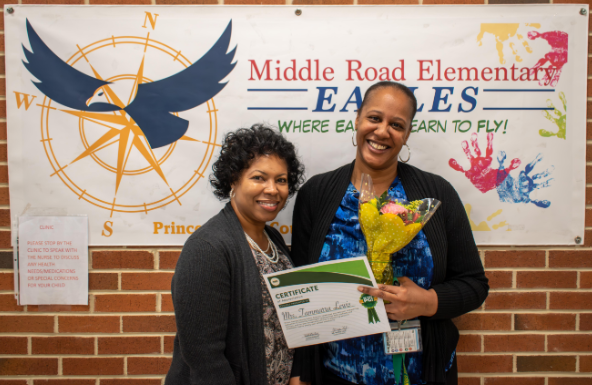
Learn more about family engagement, collaboration and attendance data. Article published by Prince George County Public Schools, Virginia.
“Chronic Absenteeism rates drops an average of four percent when compared to 2023-24 School Year, thanks to support from the community and schools to engage with students and families about the importance of regular school attendance.” — Prince George County Public Schools
Article published by The74, written by Alina Adams, March 30, 2025
“Even after 3 kids & 4 decades of conversations, it's still important to go. Strategies for when to talk to teachers & kids, and when to listen.” —Adams
EdWeek article written by IIieana Najarro, February 3, 2025
“Ileana Najarro is a reporter for Education Week covering race and opportunity in schools across the country.” —EdWeek
As I’m sure is the case for many of you, in January my thoughts often turn to the fresh, new year before me and what I’m hoping to accomplish personally and professionally in the coming months. Often, this reflection includes considering a word or phrase that I hope will be emblematic of my organizational leadership in the year ahead.
The SPLC is a catalyst for racial justice in the South and beyond, working in partnership with communities to dismantle white supremacy, strengthen intersectional movements, and advance the human rights of all people.
From film kits and lesson plans to the building blocks of a customized Learning Plan—texts, student tasks and teaching strategies—[SPLC] resources will help you bring relevance, rigor and social emotional learning into your classroom—all for FREE.
Explore the following teaching plan, titled “Teach Tolerance:”
A recording of our release event is now available. Watch here!
The KIDS COUNT Report is now available in Spanish. Download here!
Peak Parent Center provides training, information and technical assistance to equip families of children for birth through twenty-six including all disability labels with strategies to advocate successfully for their children.
An energizing discussion around Developmental Assets, meaningful relationships and positive youth development.
With reflective approaches, schools, districts, and families can support the process and organizational conditions to enable family engagement to thrive while building the dual capacity necessary to improve student outcomes.
Prerecorded 2024, 1hr.
Exploration website for parents and children or teacher and class to share daily "wonders" and learn useful and fun factual information with the opporutnity to participate in activities and make creative projects together.
Unite for Literacy has partnered with schools, tribes, nonprofits, and businesses over the last decade to re-imagine the roots of literacy education and grow lifelong readers.
To serve adult immigrant and refugee English language learners equitably and holistically, there is a pressing imperative to educate and engage service providers, policy makers, institutional decision-makers, and advocates for re-envisioning adult education, digital equity, and immigration at the national, state, and local levels.
By National Center for Families Learning
This tip sheet provides steps for educators to take before, during, and after family conferences.
A podcast made by teens for teens (and those in relationship with teens!) on what it's like to move through the world as a teenager right now.
The Equity Lab seeks to disrupt racial and ethnic inequity by engaging organizations in issues of race, equity, diversity, and inclusion (REDI).
CASEL is among the most trusted resources when it comes to social emotional learning in schools. This guide lays out essential tools for school-based teams to use as they create a process for systemic SEL implementation. It is organized into the four following focus areas: building foundational support and plan, strengthen adult SEL, promote SEL for students, and reflect on data for continuous improvement.
by Seek Common Ground
Parents and caregivers want their children to succeed in school— to be engaged and excited about learning; to build strong relationships with their teachers and peers; and to learn each year the knowledge and skills they need to be successful academically.
By Search Institute
The Search Institute's robust research has led to the conclusion that positive relationships with adults is essential for young people to thrive socially and academically. This framework can be used as guide for strengthening and deepening these relationships. This resource is available in both English and Spanish.
Reading is a Family Affair, Brilliant Together Podcast, featuring Raising a Reader and Little Free Library.
Articles and resources on parenting, media, and everything in between to help you support your child have a healthy and safe relationship with technology.
by NCFL
Explore NCFL’s library of publications, research materials, and other resources for the latest on family literacy, family engagement, and family leadership.
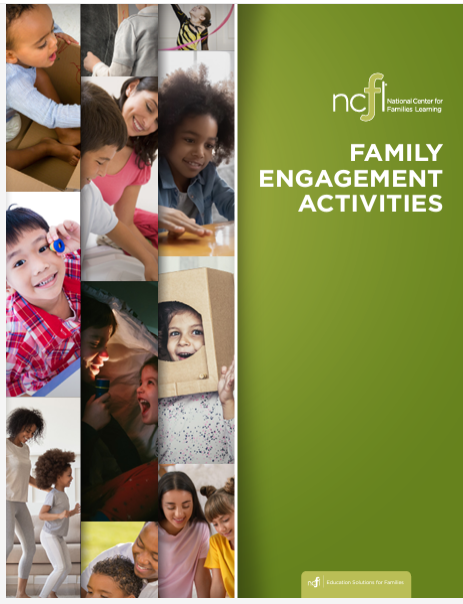
These activities encompass social-emotional benefits of play-based learning, foster inclusion, nurture cognitive and social development, support emergent learning in literacy and math and, most importantly, cultivate joy!
This resource provides educators with tools and strategies that promote equity and inclusion and allow all students to be seen, visible, and valued in their classrooms and schools.
by Digital Equity Team
The Office of the Future of Work, Colorado Broadband Office, and Office of eHealth Innovation make up the Digital Equity Team which works with partners to ensure all Coloradans have the digital skills, devices, and affordable access to the internet needed for full participation in our society, democracy, and economy.
by Colorado Education Initiative
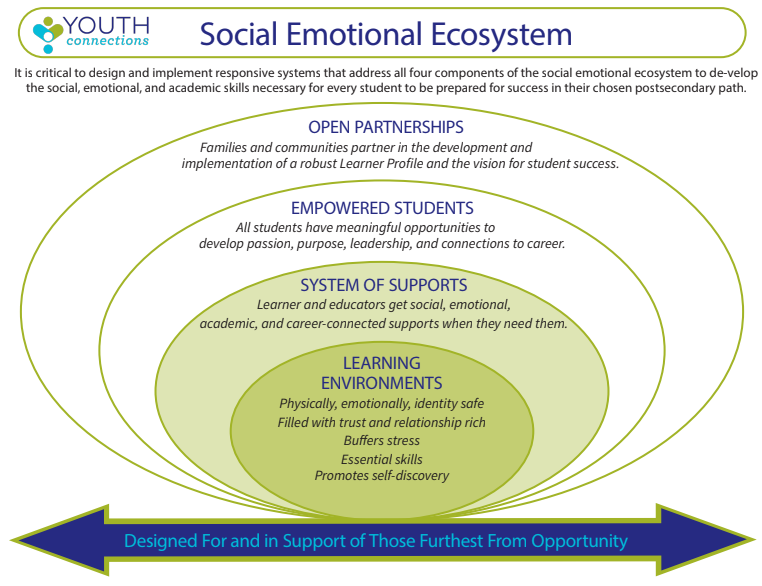
CEI developed this Social Emotional Development Ecosystem to represent the interwoven components of creating a thriving environment for students, staff, families, and community members. The four rings of the ecosytem include: learning enviornments, systems of support, empowered students, and open partnerships.
by Maria Paredes
This is a video of an Academic Parent Teacher Team (APTT) meeting at Stanton Elementary school in Southeast Washington, D.C.. APTT is a family engagement strategy that aims to provide parents the information they need to be effective partners in supporting their childrens' education. The APTT model was developed in the Creighton school district in Phoenix, Arizona by Maria Paredes.
by Raisa Masood, Common Sense Media
Find out how the artificial intelligence (AI) tool works and how to talk with kids about it.
by Jenny Anderson
Many American parents would be shocked to know where their kids were actually achieving. Nationally, 90% of parents think their children are reading and doing math at or above grade level. In fact, 26% of eighth graders are proficient or above in math and 31% are proficient or above in English, according to Learning Heroes, an organization that collects data and creates resources to improve parent-teacher relationships.
by Floyd Cobb (Author), John Krownapple (Author), Brenda CampbellJones (Foreword)
Even with access to compelling theories and approaches such as multicultural education, culturally responsive teaching, culturally relevant instruction, culturally sustaining pedagogy, schools still struggle to implement equitable change that reshapes the academic experiences of students marginalized by the prevailing history, culture, and traditions in public education. Through their work, the authors aim to equip educators with the tools necessary to deliver the promise of democracy through schools by breaking the cycle of equity dysfunction once and for all.